People considering laser vision correction in Australia usually end up comparing two names: SMILE and LASIK. The short answer is that SMILE eye surgery uses a smaller incision and a different laser approach, while LASIK creates a flap on the cornea.
Both procedures aim to reduce dependence on glasses and contact lenses, but they differ in how they reshape the cornea, who they suit best, and what recovery can feel like.
What exactly is SMILE, and how is it performed?
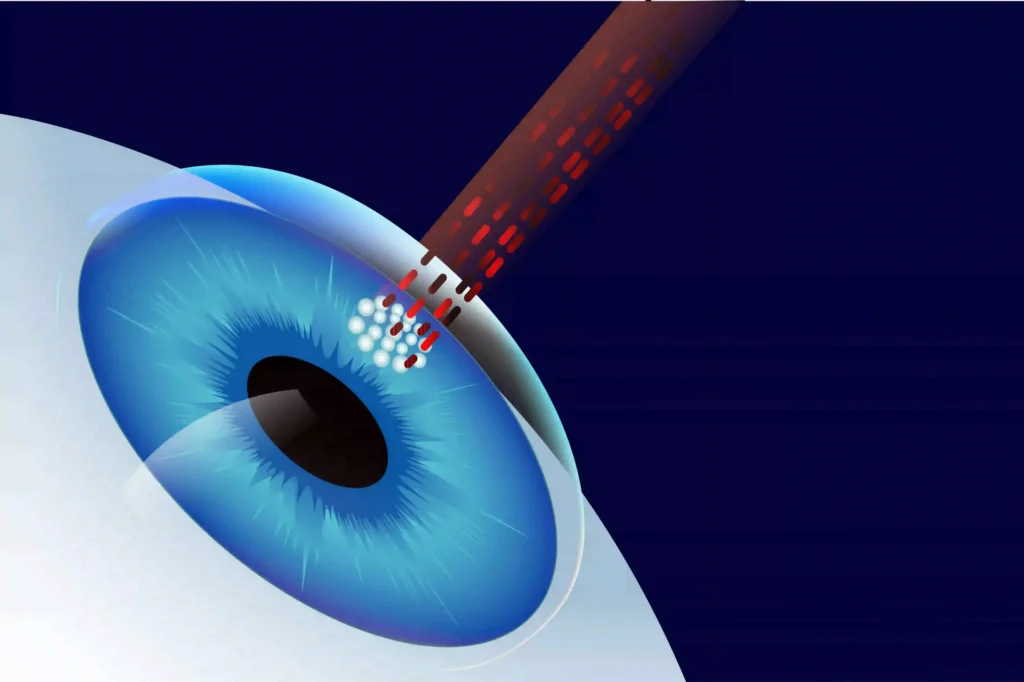
SMILE is a keyhole-style laser procedure that reshapes the cornea from within. In SMILE eye surgery, a femtosecond laser creates a small lens-shaped piece of tissue (a lenticule) which is removed through a tiny incision.
Because there is no large flap, the corneal surface is disturbed less. In Australian clinics, it is usually done as a day procedure with numbing drops.
What exactly is traditional LASIK, and how is it performed?
Traditional LASIK reshapes the cornea by creating a flap, lifting it, and applying laser energy underneath. In LASIK, the surgeon creates a thin corneal flap (commonly with a femtosecond laser), then an excimer laser reshapes the exposed corneal bed.
The flap is then repositioned to act like a natural bandage. Many Australians choose LASIK because outcomes are well-established and vision can sharpen quickly.
How do the lasers and tissue changes differ between SMILE and LASIK?
The main technical difference is how the cornea is accessed and reshaped. In SMILE eye surgery, one femtosecond laser both creates and separates the lenticule, and the cornea is reshaped by removing that tissue.
In LASIK, two steps are used: flap creation and then excimer laser ablation to reshape. This difference can influence dryness, flap considerations, and suitability.
How big is the incision in SMILE compared with a LASIK flap?
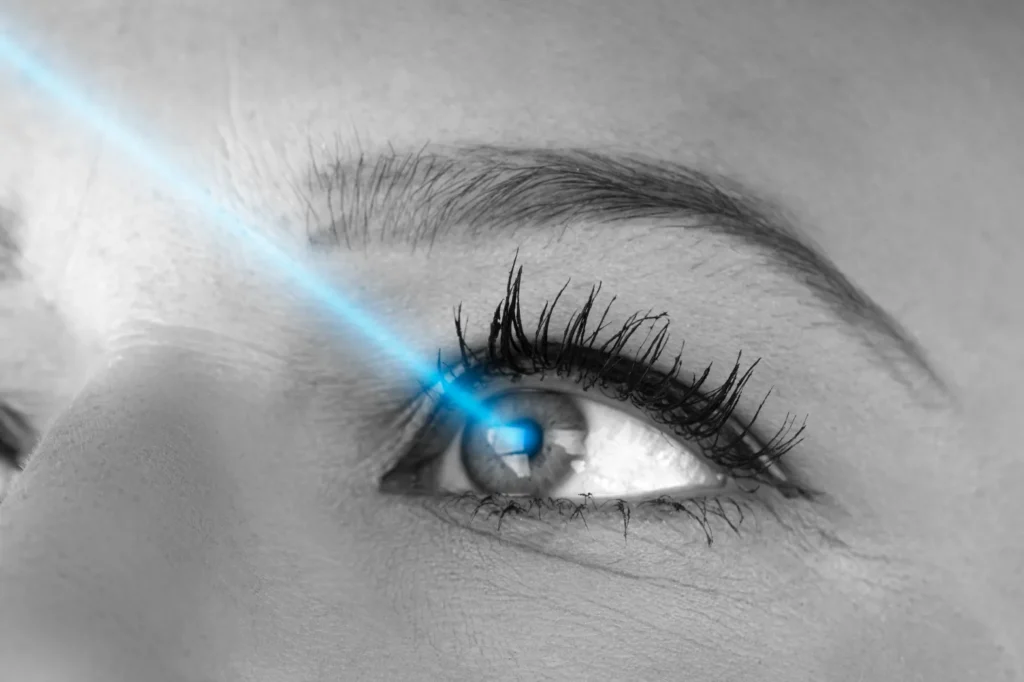
SMILE typically uses a small incision of only a few millimetres, while LASIK involves a much larger flap area. With SMILE eye surgery, the incision is often described as “keyhole,” which is why some people perceive it as less invasive.
LASIK’s flap allows direct access for laser reshaping but introduces flap-related considerations during early healing, particularly for people in high-contact activities.
Which procedure is more likely to cause dry eye symptoms?
SMILE is often associated with a lower risk of post-op dryness for some patients, but dryness can occur with either procedure. Because SMILE eye surgery may disrupt fewer corneal nerves on the surface, some people experience less dryness or a quicker improvement.
However, dry eye is common in Australia even without surgery due to air conditioning, screen use, and climate. A proper pre-op dry eye assessment matters more than assumptions.
How does recovery time compare for SMILE versus LASIK?
LASIK often delivers very rapid functional vision, while SMILE can be slightly more gradual for some people. Many return to normal routines quickly after SMILE eye surgery, but clarity can sharpen over days to weeks depending on prescription and healing response.
With LASIK, many notice a strong improvement within 24 to 48 hours, though halos, glare, and dryness can still fluctuate early on.
Which one is better for active lifestyles and contact sports in Australia?
SMILE is often preferred for people worried about flap displacement because it does not create a large flap. For Australians who surf, play footy, do martial arts, or work in physical roles, SMILE eye surgery may feel like the more reassuring option due to the small incision.
That said, both procedures come with activity restrictions at first. Surgeons typically give sport-specific timelines based on healing and risk.
Do SMILE and LASIK treat the same prescriptions?
They overlap, but they are not identical in what they treat and how. In Australia, SMILE eye surgery is commonly used for myopia (short-sightedness) and may be used for certain levels of astigmatism depending on the clinic’s system and surgeon preference.
LASIK can treat myopia, hyperopia (long-sightedness), and astigmatism, and can be a better fit for some mixed prescriptions. Eligibility depends on corneal thickness, topography, and eye health.
What are the differences in visual side effects like glare and halos?
Both can cause glare, halos, starbursts, and night-driving fluctuations during healing. Some people report fewer dry-eye-related visual fluctuations with SMILE eye surgery, which can indirectly improve comfort and perceived vision stability.
But night vision outcomes depend on pupil size, tear film, prescription level, and laser planning. Australian surgeons often screen night-driving needs and discuss realistic expectations before booking.
How do the risks differ between SMILE and LASIK?
The risks overlap, but each has procedure-specific issues. SMILE eye surgery avoids flap complications, but it has its own learning curve and technique-specific risks, such as lenticule-related issues that require careful handling.
LASIK has decades of data and predictable outcomes, but flap-related complications, while uncommon, are unique to LASIK. In both, infection is rare but serious, which is why aftercare and hygiene matter.
Which procedure is more likely to need an enhancement later on?
Enhancement rates vary by prescription and individual healing, not just the procedure name. Some people may need a touch-up after SMILE eye surgery, particularly with higher prescriptions or if the eye heals in an unexpected way.
LASIK enhancements are often straightforward because the flap can sometimes be lifted again, but not always, and timing matters. In Australia, enhancement policies differ by clinic, so it is worth checking what is included in quoted fees.
What should Australians expect during the consultation process?
A good consult focuses on safety, suitability, and realistic goals, not just speed or price. For SMILE eye surgery or LASIK, Australian clinics typically assess corneal thickness, corneal shape (topography), tear film, pupil size, prescription stability, and general eye health.
They should also ask about lifestyle, work conditions, sport, and whether they are prone to dry eye. If the clinic does not explain why a person is suitable, that is a concern.
How do costs compare in Australia, and what affects pricing?
Costs are shaped by technology, surgeon experience, clinic inclusions, and follow-up care. SMILE eye surgery can sometimes be priced similarly to premium LASIK in major cities like Sydney, Melbourne, Brisbane, Perth, and Adelaide.
Price can change based on the laser platform, diagnostics used, and whether aftercare visits and enhancements are included. Australians should compare like-for-like inclusions, not just headline numbers.
Who might be a better candidate for SMILE, and who might suit LASIK?
SMILE is often considered for people with myopia who want a small-incision approach and may be concerned about dryness or contact sport. SMILE eye surgery can be appealing if they want to avoid a flap and their prescription fits the treatment range.
LASIK can be better if they have hyperopia, certain astigmatism patterns, or if the surgeon believes the cornea will respond more predictably with excimer ablation. The best choice is the one that fits the eye, not the trend.
What questions should they ask their surgeon before choosing?
They should ask questions that reveal suitability, risk, and long-term planning. For SMILE eye surgery versus LASIK, useful questions include: which procedure the surgeon would choose for that specific corneal shape, what dryness management looks like, and what the enhancement pathway is if the result is under-corrected.
They can also ask how many procedures the surgeon performs, what complications look like in real terms, and what aftercare schedule is included.
So, how does SMILE eye surgery differ from traditional LASIK in practical terms?
In practical terms, SMILE is typically flap-free with a small incision, while LASIK involves a flap and excimer laser reshaping. Many Australians like SMILE eye surgery for the keyhole approach and potential dryness advantages, while LASIK remains popular for its broad prescription range and long track record.
The right decision should be based on clinical measurements, lifestyle needs, and surgeon advice, not a one-size-fits-all promise.
SMILE eye surgery is a minimally invasive laser vision correction procedure where a femtosecond laser creates a small lens-shaped piece of tissue called a lenticule within the cornea. This lenticule is then removed through a tiny incision, reshaping the cornea from within without creating a large flap. Typically done as a day procedure with numbing drops, SMILE disturbs the corneal surface less than traditional methods.
Traditional LASIK involves creating a thin corneal flap using a femtosecond laser, lifting this flap, and then applying an excimer laser to reshape the exposed corneal bed. The flap is repositioned to act like a natural bandage. LASIK often delivers rapid functional vision improvement within 24 to 48 hours, whereas SMILE’s visual clarity can sharpen more gradually over days to weeks. LASIK’s larger flap may introduce flap-related healing considerations not present with SMILE.
SMILE uses a small ‘keyhole’ incision of only a few millimetres to remove the lenticule, making it less invasive on the corneal surface. In contrast, LASIK requires creating a much larger corneal flap to access the underlying tissue for laser reshaping. This larger flap can have implications during early healing, especially for individuals engaged in high-contact activities or sports.
SMILE eye surgery is often preferred for people involved in active lifestyles or contact sports such as surfing, footy, or martial arts because it does not create a large corneal flap that could be displaced during physical activity. The small incision used in SMILE offers greater reassurance for those concerned about flap-related complications. However, both procedures require initial activity restrictions and surgeons provide sport-specific recovery timelines.
SMILE tends to be associated with a lower risk of post-operative dry eye symptoms because it disrupts fewer corneal nerves on the surface compared to LASIK. This may result in less dryness or quicker improvement for some patients. Nevertheless, dry eye can occur with either procedure and is common in Australia due to factors like air conditioning and screen use. A thorough pre-operative dry eye assessment is crucial regardless of the chosen surgery.
While there is overlap, SMILE and LASIK are not identical in their treatment capabilities. In Australia, SMILE is commonly used for myopia (short-sightedness) and certain levels of astigmatism depending on clinic protocols and surgeon preference. LASIK can treat myopia, hyperopia (long-sightedness), and astigmatism, making it suitable for some mixed prescriptions. Eligibility for either procedure depends on factors like corneal thickness, topography, and overall eye health.